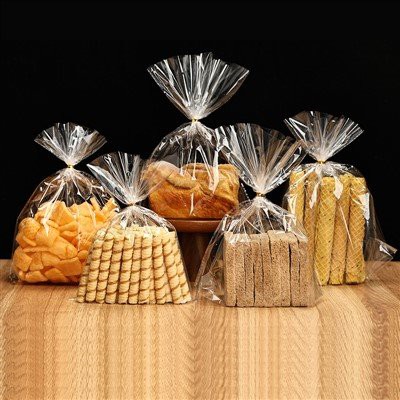
The thickness of a high-pressure flat bag usually refers to the thickness of a single side, not the combined thickness of both sides. This standard is common in the packaging industry.
Specifically, the thickness parameter of a high-pressure flat bag indicates the thickness of a single layer of material, typically measured in millimeters (mm) or micrometers (μm). For example, a flat bag with a thickness of 0.04 mm means that the thickness of the material on one side is 0.04 mm, not the combined thickness of both sides (0.08 mm). This standard helps users accurately understand the physical characteristics of products when purchasing.
From a technical perspective, the thickness of a high-pressure flat bag is closely related to its materials, manufacturing process, and application. In terms of materials, high-pressure flat bags commonly use thermoplastics such as polyethylene (PE), polypropylene (PP), or biaxially oriented polypropylene (BOPP). These materials are processed into films using blown film or cast film processes, and then cut and sealed to create the finished product. Thickness directly affects the bag's strength and durability. Thicker materials provide higher puncture resistance and load-bearing capacity, making them suitable for applications requiring protection of internal items, such as packaging electronic components and medical devices. In application scenarios, the thickness of high-pressure flat bags should be selected based on specific needs. For example, flat bags with a thickness of 0.02mm are more commonly used for packaging lightweight items such as stationery and small parts; while those thicker than 0.05mm are suitable for food, daily necessities, and other scenarios requiring higher protection. Furthermore, thickness also affects the bag's flexibility and transparency. Thinner materials are more flexible but easily damaged, while thicker materials are more rigid and tear-resistant but may reduce transparency.
Regarding industry standards, the thickness of high-pressure flat bags must meet national or international quality system requirements. For example, in food packaging, excessively thin bags may cause breakage, leading to contamination of the contents; while in industrial packaging, insufficient thickness may prevent the bag from withstanding the pressure of heavy objects. Therefore, users need to choose the appropriate thickness specification based on their actual needs. In special scenarios, such as high-temperature or freezing environments, special materials or thicker designs may be required to ensure stable performance.
It is worth noting that some products on the market may use the total thickness of both sides as the nominal value, but this is rare. Users should carefully check the product parameters when purchasing to avoid misunderstandings about thickness that may affect the product's performance. For scenarios requiring high strength or special performance, it is recommended to choose products with a thickness greater than 0.04mm, and give priority to high-pressure flat bags with anti-static and moisture-proof functions.